Elon Musk
Tesla: The Car Company That Refused to Stay a Car Company

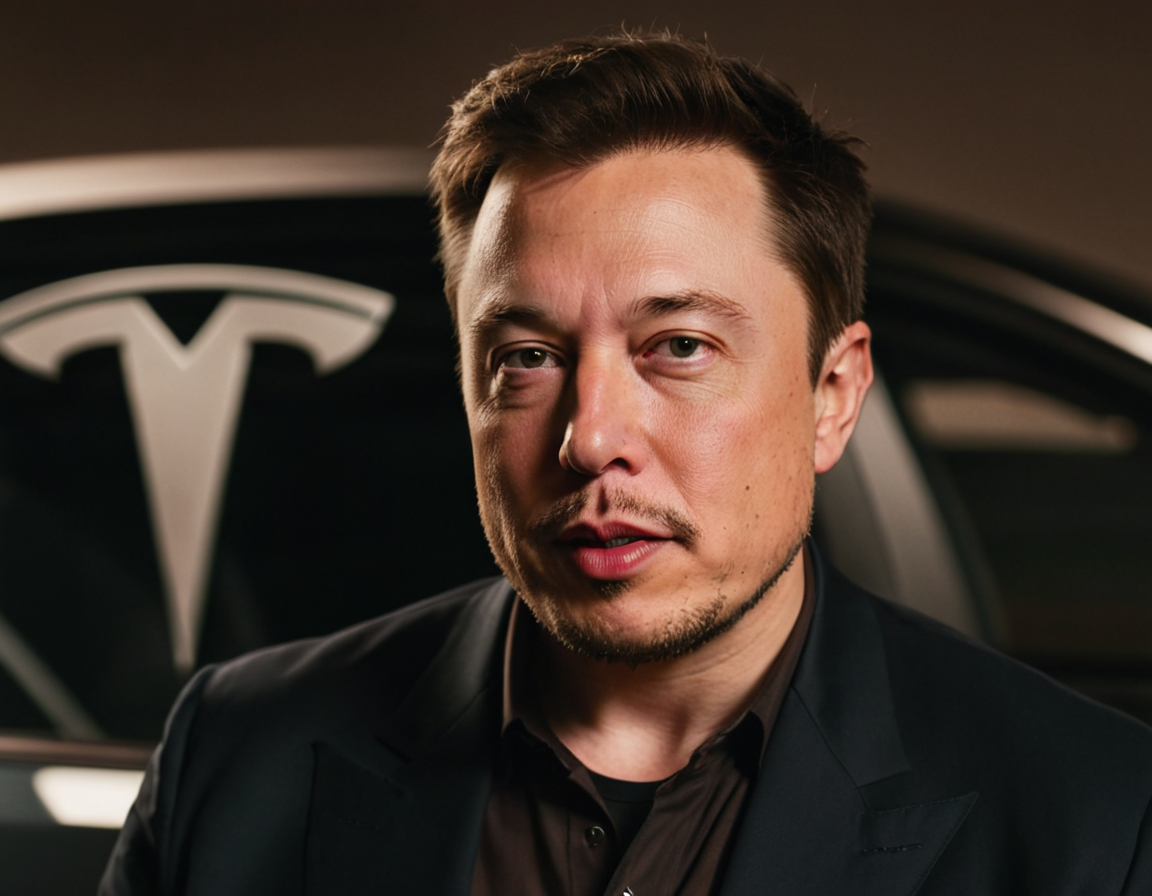
Elon Musk didn’t found Tesla. This surprises many people, who assume that the company and the man are one and the same. Tesla Motors was incorporated in 2003 by Martin Eberhard and Marc Tarpenning, two engineers who wanted to prove that electric cars could be exciting rather than merely worthy. Musk joined in 2004, leading the first big round of funding and becoming chairman, and he was soon a dominant force in the company. After a series of disputes, including a messy legal dispute over who counted as a founder, an agreement later allowed all five early figures to use the title.
The first product was the Roadster, a small electric sports car built on a Lotus chassis and powered by thousands of laptop-style lithium-ion cells. It was fast, expensive and temperamental. It also proved a point: that an electric vehicle could do zero to sixty in under four seconds and still attract wealthy buyers. By 2008, though, the project was behind schedule and over budget, and the company was nearly out of cash. Musk took over as CEO that year and poured in his own money to keep it going, a gamble that came very close to wiping him out.
The company’s survival came from a mixture of luck and ingenuity. A loan from the U.S. Department of Energy helped, as did a timely investment from Daimler, and an initial public offering in 2010 brought in more capital. The Model S, launched in 2012, was the real turning point. It was a luxury sedan that looked and felt like a car from the future, with a huge touchscreen, long range and remarkable acceleration. It won major awards and shook the assumption that electric cars had to be small and compromised.
Yet it was the Model 3, aimed at ordinary buyers starting in 2017, that turned Tesla into a mass-market company, and nearly broke it. Musk made big promises about production and then ran into what he called production hell. Robots on the assembly line didn’t work as expected, and the company set up a tent in the parking lot to add extra capacity. He slept at the factory for weeks. At one point he said Tesla was a few weeks from bankruptcy. It survived, and by 2020 it was making cars at scale and posting a profit.
What followed was one of the most unusual runs in modern business. Tesla’s stock soared, making it the most valuable car company in the world by a very wide margin, and it joined the S&P 500 in December 2020. The Model Y became one of the best-selling vehicles on the planet. The company built giant factories, which Musk called gigafactories, in Nevada, Shanghai, Berlin and Texas, and pushed hard on battery technology and manufacturing efficiency. Its Supercharger network became a standard that other automakers eventually agreed to adopt in North America.
But Tesla has never been quite satisfied with being a car company, and that is part of what makes it different. Musk has repeatedly argued that the future value lies elsewhere: in self-driving software, in energy storage and in humanoid robots. The company sells home batteries and large grid-scale storage systems, and has put huge resources into its driver-assistance system, branded Autopilot and Full Self-Driving. Musk has promised for years that fully autonomous cars were just around the corner, and for years the deadline has slipped. In 2025, Tesla began limited robotaxi service in Austin, Texas, and this year has featured new announcements, including a long-delayed next-generation Roadster reveal in October. How far the autonomy dream has really come remains one of the most contested questions in the industry.
The company has also faced real criticism. Regulators have investigated crashes involving its driver-assistance features, and safety advocates argue that the marketing names oversell what the technology can do. Quality complaints, from panel gaps to recalls, have followed it for years. The Cybertruck, delivered in late 2023 after long delays, divided opinion sharply, with some buyers loving its angular stainless-steel look and others finding it impractical. And competitors, especially Chinese makers such as BYD, have narrowed the gap rapidly.
There is a personal dimension, too. Tesla’s board has repeatedly been scrutinized for how closely it is tied to Musk. In 2018, after he posted on social media that he had funding secured to take the company private, the Securities and Exchange Commission sued, and the settlement required him to step down as chairman and pay a fine, along with Tesla. A Delaware court later struck down his giant 2018 pay package, and Tesla shareholders responded in 2025 by approving a new one with a potential value that dwarfs almost any executive compensation plan in history, though it comes with extremely demanding targets. Whether you see that as visionary alignment or governance gone strange depends on where you sit.
Musk’s public politics have also created friction for the brand. Many early buyers were environmentally minded customers on the political left, and some of them have been alienated by his statements and his involvement in government and campaigns. Sales in some markets, notably in Europe, have wobbled at times. Others have embraced the brand precisely because of him. The company is arguably the clearest example of a business whose fortunes are tied to the personality of its leader.
Still, the larger achievement is hard to deny. In 2003, the idea that a new American car company could survive, let alone dominate a market, would have been laughed at. Tesla forced the entire industry to take electric vehicles seriously, accelerated the development of batteries and charging, and pushed legacy automakers to rewrite their plans. Even critics who dislike Musk often acknowledge that the global shift to electric cars would look slower without it.
The real question for the company now is whether it can become what its CEO says it will be. Cars are a hard, low-margin business, and the lofty valuations only make sense if autonomy, robots and energy deliver. If they do, Tesla will have pulled off a transformation unlike anything seen in the car industry. If they don’t, it will still be remembered as the company that changed what a car could be. Either way, it is not just a car company, and Musk has never let anyone forget it.

The Boring Company began as a joke that Elon Musk took seriously. In December 2016, stuck in Los Angeles traffic, he posted on social media that he was going to build a tunnel boring machine and “just start digging.” Within months the idea had become a real company, operating out of SpaceX’s headquarters in Hawthorne, California. The pitch was simple: cities are congested in two dimensions, but they could add a third by moving transport underground. If tunnels could be dug much more cheaply and quickly, he argued, they could relieve traffic far better than building more freeways.
Tunneling is, however, an old and expensive field. Modern tunnel boring machines can excavate long distances, but they are slow, require large crews, and cost a great deal. Musk set out to improve this by cutting the diameter of tunnels so that they would be smaller and cheaper, increasing the speed of the machines by running them more continuously, and automating processes that normally need manual work. He also proposed reusing the excavated soil to make bricks. The company’s early boring machine, nicknamed Godot after the play Waiting for Godot, was followed by a faster machine called Prufrock. The stated goal was to dig at many times the pace of conventional methods, a claim that has been difficult for outsiders to verify.
The first visible result was a test tunnel of roughly a mile in Hawthorne, opened to the public in December 2018. Visitors rode in modified Tesla vehicles that traveled through the tunnel at moderate speeds. It was impressive as a demonstration, though far from the high-speed system Musk had suggested. The company also made a name for itself through merchandise. In 2018 it sold branded hats and, memorably, a limited run of a flamethrower-shaped item for $500, which sold out in days and raised millions of dollars, drawing both laughter and regulatory attention.
The first commercial system was the Las Vegas Convention Center Loop, completed in 2021 for around fifty million dollars. It consists of a pair of tunnels connecting halls across the convention center campus, replacing what could be a long walk in the desert heat. Passengers board Tesla cars, which are driven by humans, and travel a short distance underground. The service has worked and has moved large numbers of attendees during major trade shows, with the company reporting that it carried tens of thousands of people per day at peak events. Supporters point to it as proof that the concept functions. Critics point out that the system is simple, runs well below the capacity of a conventional subway or train, and relies on drivers rather than the full automation originally imagined.
Since then the company has pursued the larger Vegas Loop, a plan for a network linking casinos, the airport, and other destinations. Local officials in Clark County have approved large parts of the proposed network, which could eventually run to dozens of miles, and several stations have opened. Other proposals, however, have not gone as planned. Plans for an express service to Chicago’s O’Hare Airport, a route between Washington and Baltimore, and a loop to Dodger Stadium in Los Angeles were announced with fanfare but never built or were later scaled back or dropped. Some projects have continued in cities such as Nashville and elsewhere, often in modified forms. The pattern suggests that announcing a project is much easier than navigating permits, environmental review, and local politics.
The core debate is about transit logic. Urban planners and transport engineers have argued that a system of individual cars in narrow tunnels cannot move as many people as trains or buses, because capacity depends on how many vehicles can safely run per hour and how many people each carries. They note that adding more cars to a tunnel can reproduce the same congestion underground, and that public transit has long been proven for moving large crowds. Boring Company representatives respond that the tunnels are a flexible, low-cost addition rather than a replacement, and that they can be used with larger autonomous shuttles in the future. The question remains open until the system proves itself at larger scale and under real commuter demand.
Safety and environmental oversight have also drawn attention. Regulators in Nevada have fined the company over workplace safety violations, and reports of worker injuries have raised concerns about the conditions in the tunnels. There have also been disputes about wastewater and spoil disposal in Las Vegas, and fire-safety questions about running electric cars in confined spaces. The company says it addresses these issues as they arise. As with any construction operation, the details matter, and the Loop’s record will be judged over years, not months.
The Boring Company sits oddly within Musk’s portfolio. It is far smaller than Tesla or SpaceX and does not carry the same strategic importance. Yet it reveals his approach in miniature: pick a problem that irritates him personally, announce a bold vision publicly, and push the engineering to see how much can be accomplished. It has produced real innovations, such as continuous boring and cheaper tunnel construction techniques, but it has not yet delivered the radical cost reductions or the city-scale networks Musk promised. It also overlaps with his hyperloop concept, which he proposed in 2013 and then left to others, including student teams, to develop.
What might success look like? If the company could demonstrably cut tunneling costs by a large factor, the impact would reach beyond cars to utilities, subways, and freight, and it would matter even if Teslas in tunnels never became mainstream. That is the argument many supporters make, and it is the one worth watching. If costs fall and projects expand without safety problems, the company may eventually earn a place in urban infrastructure. If costs stay close to conventional levels and the networks stay small, it will remain a clever local transit option and a curiosity. For now the Boring Company stands as an unfinished experiment, a reminder that digging cities out of traffic is as much a political and economic challenge as an engineering one.
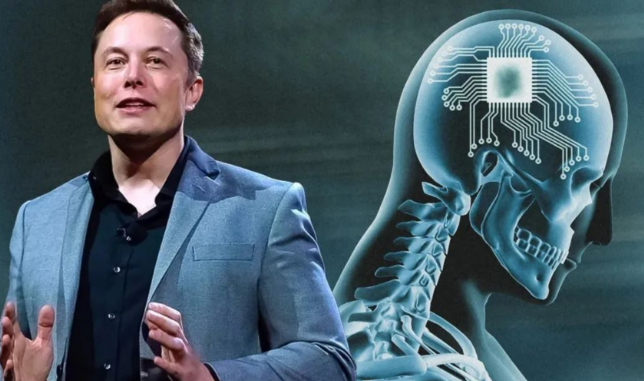
Of all Elon Musk’s companies, Neuralink is the one closest to science fiction. Founded in 2016 and publicly introduced the following year, it aims to build a direct interface between the human brain and external devices. The first goal is medical: restoring abilities to people with severe paralysis or other neurological conditions. The longer-term goal, which Musk describes with striking ambition, is to give healthy people a high-bandwidth connection to computers and, eventually, to artificial intelligence. Both aims have made the company one of the most closely watched, and most debated, in neurotechnology.
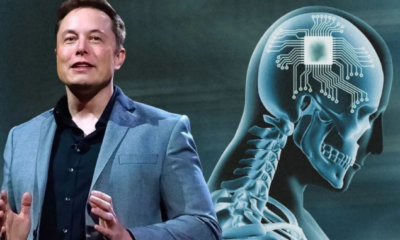
Neuralink was not the first group to attempt brain-computer interfaces. Academic researchers have implanted electrode arrays in patients since the 1990s, and projects such as BrainGate allowed people with paralysis to control cursors and robotic arms. What Neuralink brought was Silicon Valley engineering and money. Its device, called the N1 implant, is a small coin-sized chip placed in the skull, connected to very thin, flexible threads that carry electrodes into the brain’s surface. A single implant carries over a thousand electrodes spread across dozens of threads, far more than older systems. Because the threads are so fine, they are hard for a human surgeon to place, so the company built a dedicated surgical robot to insert them with precision.
The company first made headlines through demonstrations. In 2020 Musk showed a pig with an implant, and in 2021 a macaque named Pager appeared to play the video game Pong using only brain signals. These presentations drew enormous attention, but they also invited scrutiny. Reports in 2022 and later, including accounts from former employees and records obtained by journalists, alleged that animal experiments had been rushed and that some animals suffered complications and were euthanized. Federal agencies looked into the matter, and the company has said that it follows animal welfare rules and has improved its practices. The debate shows how hard it is to move quickly in medicine while maintaining ethical standards.
Regulation is the real gate. Neuralink applied to the U.S. Food and Drug Administration for permission to test in humans in 2022, and the agency initially declined, citing safety questions about the battery, the threads, and the surgical removal of the device. After the company addressed these concerns, the FDA approved a first clinical trial in May 2023. In January 2024, the company implanted its first human participant, Noland Arbaugh, a young man paralyzed from the shoulders down after a diving accident. He later showed that he could move a computer cursor, play chess and video games, and browse the internet by thought. It was a real milestone, even if the capabilities were comparable to those previously shown in academic research.
The trial also revealed a technical problem. Weeks after the surgery, some of the threads pulled out of Arbaugh’s brain tissue, reducing the number of working electrodes and the quality of the signal. Neuralink adjusted its software to compensate and the performance recovered, and the company said it would adjust the surgical technique for later patients. More participants have since joined the study, and Musk has said the company hopes to scale to many more patients, with high-volume production and a largely automated surgical procedure planned for 2026. Independent experts note that the sample sizes are still small and that long-term durability, which will take years to establish, is the crucial question.
Neuralink has outlined a series of products. The first, called Telepathy, lets people with paralysis control a computer or phone. A second, called Blindsight, aims to restore a form of sight by stimulating the visual cortex, and the FDA granted it a designation intended to speed development. The company has also discussed trials for restoring speech and movement and treating conditions that affect the brain. Each of these is difficult, and early claims should be treated as goals rather than promises. Even so, investors have been willing to back the work: in 2025 the company reportedly raised roughly $650 million at a valuation of around nine billion dollars.
The field is increasingly competitive. Synchron has developed a less invasive device inserted through blood vessels and has also implanted patients. Blackrock Neurotech has supplied arrays used in many academic studies for years. Other start-ups, including Paradromics and Precision Neuroscience, are pursuing their own designs, and Chinese research groups are advancing quickly. Some observers argue that Neuralink’s real contribution may be speed and scale, pushing the whole field toward more electrodes, better materials, and surgical automation, whether or not its own device ultimately wins.
Then there are the questions Musk himself raises. He has argued that people should merge with machines so that humans are not left behind by advanced AI, describing the interface as a kind of insurance policy for the species. Neuroscientists are skeptical that healthy people will accept brain surgery for convenience or that it is possible to read thoughts as simply as he sometimes suggests. Ethicists point to privacy, since neural data may be the most intimate information a person can generate. They also point to consent, security against hacking, and the possibility of unequal access if enhancement becomes available only to the wealthy. These are not reasons to stop the research, but they are reasons for clear rules before the technology moves beyond medicine.
Neuralink’s story so far shows both the promise and the risk of Musk’s method. The company has moved faster than many academic programs, helped by money, a willingness to build hardware in-house, and the attention that comes with Musk’s name. It has also been criticized for hype, for transparency gaps, and for the pressure created by public deadlines. If it succeeds in giving people with paralysis new independence, it will rank among his most meaningful achievements. If it falls short, it will still have raised public awareness and investment in a field that has long been underfunded. Either way, the next few years of patient data will matter more than any presentation.
Twitter was founded in 2006 by Jack Dorsey, Noah Glass, Biz Stone, and Evan Williams, and over the next fifteen years it became a place where news broke, politicians argued, and celebrities talked to fans. Yet it never matched the profits of its peers. It went public in 2013, repeatedly missed growth targets, and struggled with abuse and misinformation on the platform. For Elon Musk, who joined in 2009 and became one of its most active and most followed users, it was both a megaphone and a frustration. In 2022 he decided to take it over.
The move began quietly. In early April 2022, Musk disclosed that he had built a stake of just over nine percent, making him the largest shareholder. Twitter’s board first offered him a seat, then he declined it, and within days he made an offer to buy the whole company at $54.20 a share, about $44 billion. He described the purchase as a matter of principle. Twitter, he argued, had become the “de facto town square,” and it needed to be run in a way that protected free speech within the law. The board adopted a defensive measure known as a poison pill, but after negotiations it accepted the offer in late April.
What followed was one of the stranger corporate sagas of the decade. Within weeks Musk was questioning how many of the platform’s accounts were real, and in July he tried to terminate the agreement. Twitter sued in Delaware to force him to complete it. Facing a trial, Musk reversed course and agreed to proceed. The deal closed on October 27, 2022. On his first day he dismissed the chief executive Parag Agrawal and other top executives. He then moved fast to reshape the company, famously walking into the headquarters carrying a kitchen sink as a joke about “letting it sink in.”
The company he took over was already financially strained, and the purchase was financed with a large amount of debt in addition to Musk’s own money and contributions from other investors. To reduce costs, Musk cut the workforce by more than half, with some reports putting the reduction closer to eighty percent over time. He demanded that remaining staff commit to what he called “hardcore” work, and many left. Skeptics predicted that the site would break. It had outages and bugs, but it largely stayed online, a result that supporters cite as evidence that the company had been bloated and that critics counter overlooks the many functions that quietly degraded.
Product changes arrived at pace. Musk replaced the old verification system, which had given blue check marks to notable and verified accounts, with a paid subscription available to anyone, eventually folded into a package called X Premium. He restored many accounts that had been suspended, including former President Donald Trump’s, after a poll he ran on the platform. He published portions of the recommendation algorithm’s source code in 2023 and promoted Community Notes, a system in which volunteer contributors add context to misleading posts, which has been praised as an unusual approach to fact-checking. In July 2023 the company dropped the Twitter name and bird logo and became X, part of Musk’s long-held wish to build an “everything app” combining social networking, payments, video, and commerce, similar to China’s WeChat.
Advertising proved the hardest part. Many major brands paused or reduced spending after the takeover, citing concerns about hate speech and brand safety, and X’s ad revenue fell sharply. Musk responded combatively, at one point telling advertisers who left to go do something unprintable, and the company sued some advertising groups, alleging an illegal boycott. Linda Yaccarino, a veteran advertising executive, was hired as chief executive in 2023 to repair those relationships, and she stepped down in 2025. Meanwhile the company leaned more on subscriptions and on other revenue sources, with mixed results. Because X is now privately held, detailed financials are not public, though reporting suggests its valuation fell well below what Musk paid.
Content moderation remains the most argued-over question. Defenders say Musk ended a period of heavy-handed suppression, particularly of political speech, and made the platform friendlier to a wider range of views. Critics, including researchers who study online harassment and extremism, say hate speech and false information rose after the takeover, that moderation teams were gutted, and that the platform amplifies Musk’s own opinions. Studies have reached differing conclusions, partly because researchers lost easy access to platform data. What is clear is that the platform’s culture changed and that its owner is highly active in shaping it.
X has also become a legal and diplomatic flashpoint. In 2024 Brazil’s Supreme Court justice ordered the platform blocked for several weeks after a dispute over removing accounts and appointing a legal representative, until X complied. European regulators opened proceedings under the Digital Services Act, and in late 2025 the European Commission fined the company for violating transparency rules, prompting Musk to say the EU should be abolished. Authorities in other countries, including France, have also pursued investigations. These fights highlight an unresolved question: how should a global platform handle different national laws about speech when its owner is determined to resist them?
In 2025 Musk combined X with his artificial intelligence company xAI in an all-stock transaction, valuing X at tens of billions of dollars. The logic was straightforward. X provides a huge stream of real-time public conversation to train and use AI systems, and xAI’s chatbot Grok gives X a signature feature. The merger also made clear that Musk sees the platform less as a standalone business than as infrastructure for his broader technology ambitions. Later reporting suggests the combined entity has become part of an even larger corporate web with SpaceX.
So was the purchase a success? That depends on the yardstick. Financially, it looks like a costly acquisition that has yet to deliver strong returns. Culturally and politically, it gave Musk a platform with outsized influence, one he used heavily in the 2024 U.S. election and in debates around the world. For users, the experience has changed: fewer rules enforced in some areas, more paid features, and more of the owner’s personality. For the broader industry, X has also served as an experiment, showing both how much a lean team can sustain and how much trust and revenue can be lost when a platform changes course abruptly. The result is neither the disaster its critics predicted nor the free-speech utopia its owner promised, and its long-term place in the media landscape is still unsettled.
-
 Elon Musk53 minutes ago
The Boy from Pretoria Who Wanted to Save the World
-
 Elon Musk55 minutes ago
Starlink: The Quiet Giant Inside SpaceX
-
 Elon Musk53 minutes ago
From Zip2 to PayPal: How Musk Learned to Bet Everything
-
 Elon Musk52 minutes ago
SpaceX and the Four Rockets That Almost Ended It All
-
 Elon Musk42 minutes ago
Elon Musk’s Bet on the Public Square
-
 Elon Musk40 minutes ago
Neuralink: Elon Musk’s Attempt to Connect Brains and Computers
-
 Elon Musk37 minutes ago
The Boring Company: Can Elon Musk Dig Cities Out of Traffic